

Stocking the pantry may seem more like a budget buster than a money saver when thinking about buying so much food, but trust me when I say that second to meal planning, keeping a stocked pantry is personally my best tool for keeping healthy meals on the table with a tight budget. Follow these tips for how to stock pantry essentials on a budget and have endless meal potential at your fingertips!
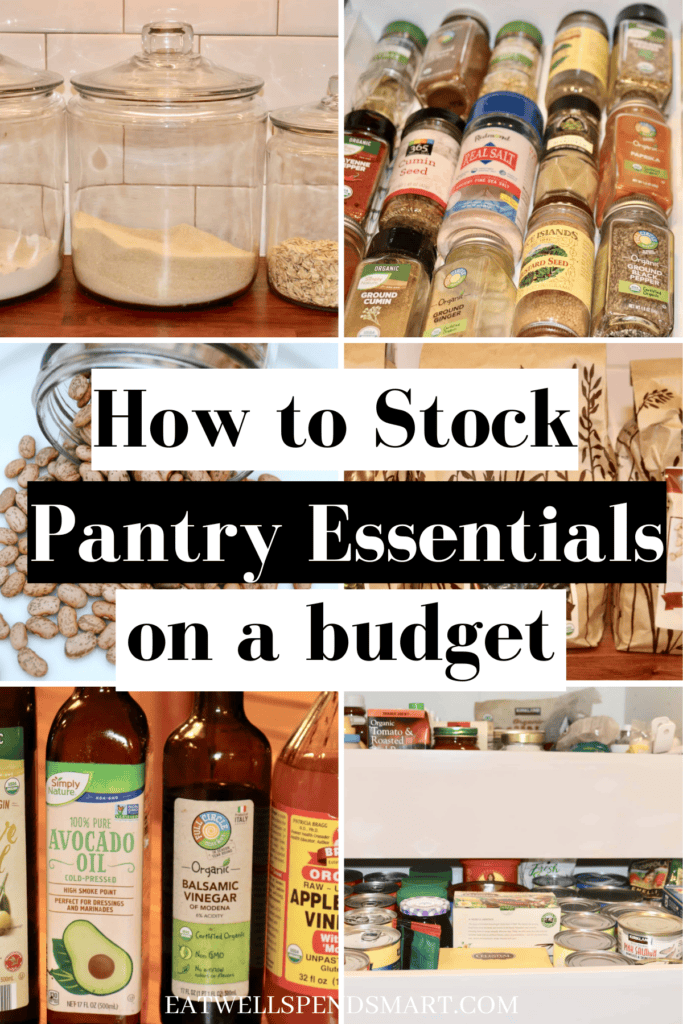
I'm a firm believer in using what you have to save money on food. If you are making a meal plan around recipes that sound good and buying all of the obscure ingredients for those recipes, eating at home will likely be expensive. There is a better way! Instead strategically stock a pantry with versatile budget-friendly items that you regularly use in a variety of meals that your family enjoys, and it will change the game. You can finally start asking, "what do I have on hand that I can build a meal with?"
Imagine having a craving for a particular meal and breathing a sigh of relief knowing that you can make it because your pantry, freezer, and fridge and stocked with basic ingredients. That's the beauty of stocking pantry staples. I find that having a well stocked pantry is essential to a "real food" kitchen. It helps keep the grocery budget down, helps with meal planning, and makes quick fix meals much easier since you already have essential items on hand. Lastly, I find that it also just makes good sense to have a good stock of food staples on hand for emergency situations. You never know what life will bring. It can take a while to build up your pantry staples, but once you do, you will love it!
Once your pantry is stocked with basic spices, baking goods, canned goods, and dry goods, you can basically just buy on sale produce weekly, meat on sale (if you don’t buy it in bulk), and a few pantry items that need to be restocked. Streamlining your pantry helps keep weekly costs down and also simplifies meals and shopping.
But how do you start?
How to stock the pantry on a budget
Building the pantry is a gradual process. Unless you have a lump sum of money that you can spend right away, resist the urge to purchase everything at once. It’s best to purchase a little at a time and build it slowly.
Start by reverse engineering. Think of your top 5-10 meals that your family likes to eat and the food that it takes to make them. That is the bulk of what you want to keep stocked.
Make a list of everything you desire to have in your well-stocked pantry and every week buy several of those items. Set aside a set amount of your grocery budget just for pantry staples. This can be as little as $5-10 a week. Really whatever you have to spare. Over time you will have reached your goal without breaking the bank. It's that simple.
Your pantry list will likely be different from mine and that's ok. Every family has different dietary needs and tastes. We enjoy beans and grains in our family, but maybe yours doesn't. Please don't buy something just because someone told you to. You will simply be wasting money. A well-stocked pantry isn’t about having everything—it’s about having the right things for you.
Below are a few tips to master the well stocked pantry.

Take inventory of what you have
Clean out your existing food storage like your fridge and cabinets. Give everything a good scrub and see what you already have. You may be surprised! Check expiration dates and toss anything that is bad. Look for duplicates. Write down everything you have so you have an accurate list.
Keeping good records and staying organized can prevent you from having 4 jars of that spice you swore you were out of. (Not that I do that or anything. lol)
Focus on Versatile Staples
A budget-friendly pantry should reflect your real habits—not an idealized version of yourself who makes gourmet meals every night. Focus on staples that work across multiple recipes you already enjoy.
If you love "bowl" type meals, rice or another grain will likely be in your pantry. If you love Italian food, you'll want several kinds of pasta. Those two items don't stop there though. They can be use in casseroles, skillet meals, and soups as well! Versatile.
Flour can not only be used as a thickening agent in sauces, gravies, and soups, but it can also be used to make countless baked goods like biscuits, tortillas, bread, scones, muffins, and more! Versatile.
These ingredients form the backbone of countless meals and prevent last-minute takeout when you “have nothing to eat.”

Buy store brands or shop at discount stores
Aldi is a great place to buy your pantry staples. They have great prices on canned goods, beans, and condiments like ketchup and mustard. If you don't have an Aldi, look for who has the least expensive prices in your area like Walmart, Ruler Foods, or Trader Joes.
I also love a generic store brand. The price is almost always cheaper and the quality is likely very similar.

Shop sales
Pay attention to the sales fliers and look for sales on the items on your wishlist. The Flipp app is a great way to see all the sales fliers of the store in your area.
Adding your desired pantry items gradually will already be saving your money, but when you can combine them with a sale, it's like gold! When canned goods go on sale, stock up on the ones you use regularly. If spices go on sale, buy several! This is how you are going to stock the pantry on a budget.
Just avoid buying something just because it’s cheap or on sale—unused food is wasted money.
Pantry Staples List
Here is what I keep in my pantry. Hopefully this will spark some inspiration.
- rice (white rice or brown rice)
- oats
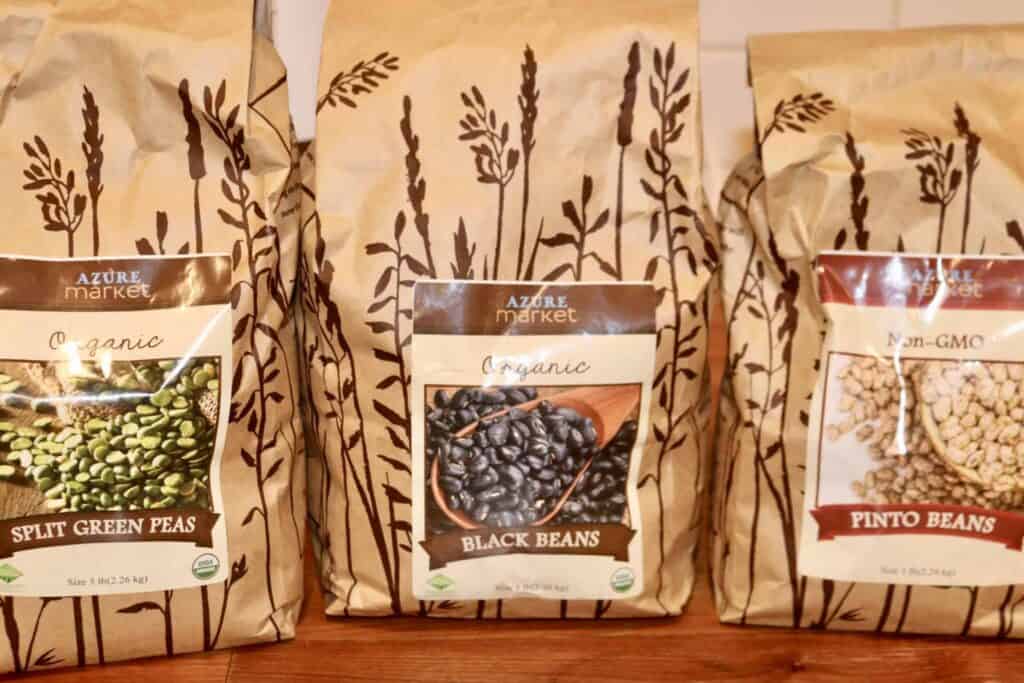
- beans (dry beans and canned beans: pinto beans, black beans, chickpeas, kidney beans, white beans)
- lentils (red lentils, green/brown lentils)
- cornmeal
- quinoa
- popcorn
- seeds and nuts
- tomato products (crushed tomatoes, whole tomatoes, diced tomatoes, tomato paste)
- pasta (long cut like spaghetti and short cut like macaroni or rotini)
- pasta sauces
- stock (chicken and beef for when I don't make my own)
- oils (olive oil, coconut oil, avocado oil)
- vinegars (red wine vinegar, apple cider vinegar, balsamic, white)
- flour (any type of flour you use: unbleached all purpose flour, whole wheat flour, almond flour, gluten free flour)
- yeast
- sugar (cane sugar, brown sugar, coconut sugar, or whatever sweetener you use)
- honey
- maple syrup
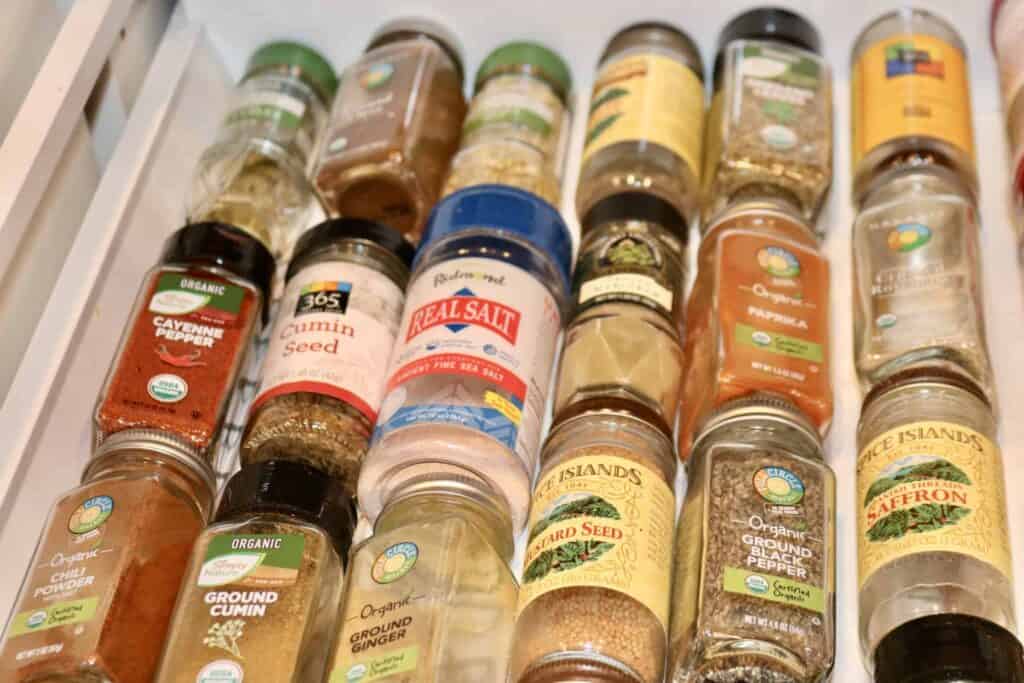
- seasonings: salt, black pepper, garlic powder, chili powder, onion powder, cumin, paprika, cinnamon, Italian seasoning, curry powder, etc. I have a lot of spices. This is only a sampling. Start with a few very basic (salt, pepper, garlic powder) and add more when you expand your cuisines.
- peanut butter or almond butter
- baking powder
- baking soda
- vanilla
- cocoa
- chocolate chips
- ketchup
- mustard
- bbq sauce
- mayo
- hot sauce
- salsa
- jarred condiments (pickles, olives, etc)
- soy sauce (gluten free tamari or coconut aminos)
- canned meats (canned tuna, canned salmon, canned chicken)
- coconut milk
- Fresh produce that can be stored room temperature or long lasting in the fridge (onions, garlic, potatoes, sweet potatoes, carrots, apples, lemons, oranges)
Rotate and Use What You Buy
A budget pantry only works if food doesn’t go to waste. Store newer items behind older ones so you naturally use what’s already open. Try to plan meals around what you have before shopping again.
Doing a “pantry challenge” once a month—using only what you have on hand—can also help stretch your budget and spark creativity.
Replenish your pantry as needed. I like the one out, one in rule. When I use something from my pantry, I look at what I have left. If I only have one or none left, that item goes on my grocery list. If I have plenty left, I wait a while. Take it from me, it is not a good idea to wait until everything is gone before restocking. You will end up with a huge bill that week and no one wants that.
How to Use Pantry Items
Here are a few ways to use pantry goods to make meals:
Leave a Reply